

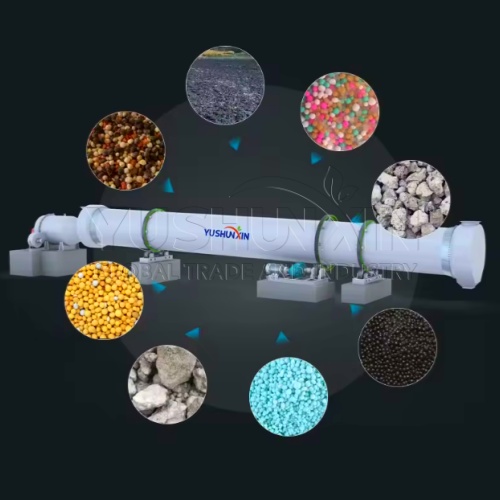
A fertilizer production plant needs stable moisture control after granulation because excessive moisture can affect storage, transportation, and final product handling. A fertilizer dryer for mineral and compound fertilizer granules helps fertilizer manufacturers reduce moisture content and create suitable conditions for the next production stage. A professional fertilizer processing plant usually evaluates raw materials, granulation technology, production capacity, and final fertilizer requirements before selecting a drying system.
Why does a fertilizer production plant need a drying process after granulation?
Mineral and compound fertilizer granules often contain moisture after the granulation procedure. The moisture level depends on the selected fertilizer production technology, raw material characteristics, and granulation method.
A compound fertilizer production line may use materials such as urea, ammonium phosphate, potassium chloride, potassium sulfate, and mineral additives. A mineral fertilizer project may process phosphate materials, potassium-based materials, limestone powder, or other mineral components. These materials require suitable fertilizer manufacturing systems because different formulas create different drying requirements.
A fertilizer dryer supports the fertilizer production process by controlling moisture after granulation. Proper drying improves product stability and helps fertilizer manufacturers prepare granules for screening, coating, storage, and packing.
The fertilizer manufacturing process usually connects granulation, drying, cooling, screening, and packing sections. The drying stage should match the capacity of the granulator because an unbalanced system can reduce the efficiency of the complete fertilizer production line.
The fertilizer processing plant should therefore consider the complete production procedure instead of selecting a dryer separately. The drying equipment needs to work together with upstream and downstream fertilizer machinery.
What raw materials require fertilizer drying equipment in mineral fertilizer production?
Mineral fertilizer manufacturers process different raw materials according to their product formulas. Common materials include phosphate rock derivatives, potassium materials, limestone, gypsum, and other mineral additives. Compound fertilizer plants may combine nitrogen, phosphorus, and potassium materials to produce different NPK formulas.
The physical characteristics of these raw materials influence fertilizer production preparation. Particle size, moisture content, density, and chemical composition affect granulation performance and drying requirements.
A mineral fertilizer production system may use a rotary dryer after wet granulation because fresh granules contain additional moisture from the forming process. The dryer removes unnecessary moisture and supports consistent product quality.
A fertilizer manufacturing plant that produces compound fertilizer granules also needs suitable temperature control during the drying procedure. Excessive drying conditions can influence fertilizer characteristics, while insufficient drying can create storage problems.
A complete fertilizer treatment system should consider drying as one part of the manufacturing process. The dryer, cooler, screening machine, and packing machine should operate with compatible capacity.
The mineral fertilizer production process provides a reference for understanding how raw material preparation, granulation, drying, and finishing stages connect together.
How does a fertilizer dryer improve fertilizer manufacturing system performance?
A fertilizer dryer improves production stability by creating controlled moisture conditions. The equipment usually works with a hot air system that transfers heat to fertilizer granules while the material moves through the drying chamber.
The fertilizer production equipment arrangement influences drying efficiency. A rotary dryer commonly works together with feeding equipment, hot air systems, dust collection units, and cooling equipment. This combination allows fertilizer manufacturers to create a continuous fertilizer processing system.
A drying machine should match fertilizer granule characteristics. Larger granules, different formulas, and different production capacities may require different drying parameters.
A fertilizer manufacturing system should also consider energy management. The fertilizer production cost includes fuel consumption, electricity use, maintenance requirements, and production efficiency. A suitable drying solution helps factories balance operational cost and product quality.
A fertilizer dryer is not an independent machine in a commercial fertilizer factory. The equipment connects with the complete fertilizer production line and supports stable operation from granulation to final packaging.
A fertilizer equipment quotation should describe drying capacity, supporting equipment, heating method, and installation requirements. These details help investors understand the complete fertilizer manufacturing investment.
Which equipment should work with a fertilizer dryer in a complete production line?
A commercial fertilizer production line usually includes several supporting machines around the dryer. A granulator creates fertilizer particles before drying. A screening machine separates qualified granules after drying. A cooling machine can reduce product temperature before storage or coating.
A conveyor system transfers materials between different processing sections. A dust collection system can support cleaner operation when fine fertilizer particles appear during transportation and drying.
A compound fertilizer production plant may also include a coating machine when the market requires improved appearance or controlled product characteristics. The final equipment combination depends on fertilizer product requirements and production planning.
A fertilizer production equipment solution helps manufacturers understand how individual machines form a complete fertilizer manufacturing system. A suitable fertilizer processing plant should balance every production section instead of focusing only on one machine.
The fertilizer production technology should match actual factory conditions. The production capacity, available space, raw materials, and finished fertilizer standards all influence equipment selection.
What should investors check before purchasing fertilizer drying equipment?
Investors should review several technical and commercial factors before purchasing fertilizer drying machinery. The evaluation should include fertilizer capacity, moisture requirement, fuel source, energy consumption, maintenance access, spare parts, and integration with existing fertilizer equipment.
A fertilizer manufacturing quotation should clearly explain equipment scope and supporting systems. Investors should understand whether the quotation includes hot air equipment, conveyors, control systems, dust handling, and installation support.
The fertilizer manufacturing cost depends on the whole fertilizer production system. A lower machine purchase price may not represent a lower long-term investment if the equipment cannot match the production process.
A reliable fertilizer processing solution should support stable production, reasonable maintenance, and future expansion. The fertilizer factory should select equipment according to actual production needs instead of choosing unsuitable specifications.
A professional fertilizer equipment manufacturer- Yushunxin can provide fertilizer drying solutions according to mineral materials, compound fertilizer formulas, production capacity, and factory requirements. If you have interests, you can learn more about https://www.mineralfertilizerproductionsolutions.com/product/fertilizer-dryer/