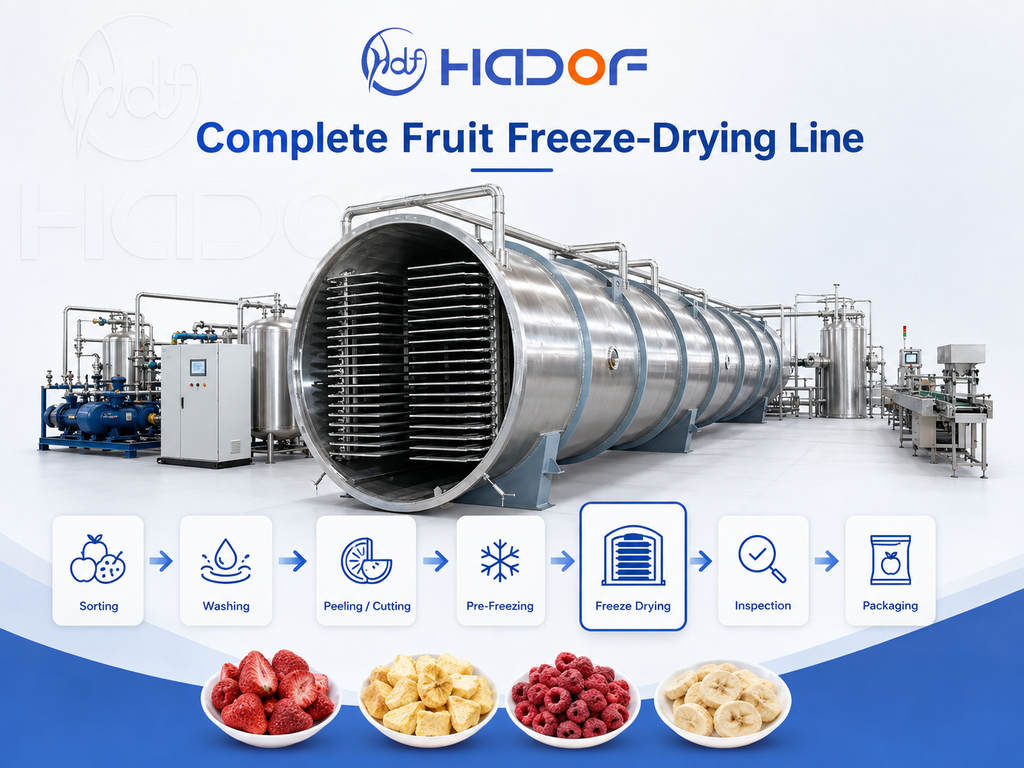
Factory layout has a direct impact on freeze-drying efficiency. Even when a factory uses a high-capacity freeze dryer, poor equipment placement can create unnecessary material movement, longer loading times, production bottlenecks, and higher labor requirements.
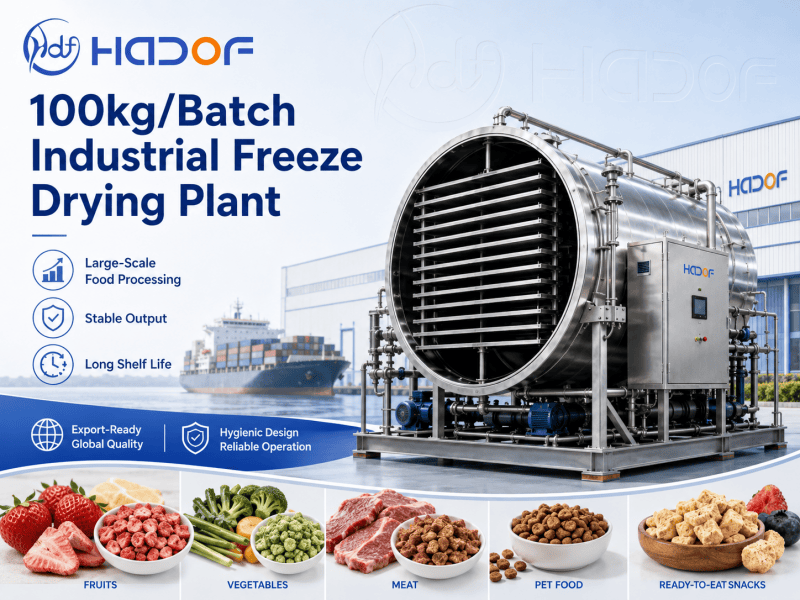
For a commercial project, the 100 kg/batch industrial freeze-drying plant works best when the surrounding preparation, freezing, drying, unloading, and packaging areas follow a clear production flow.
HADOF can configure the production line according to your raw materials, required production capacity, and available factory space. A practical layout helps each machine work as part of one coordinated process instead of operating as an isolated piece of equipment.
How Can Factory Layout Reduce Material Handling Time?
Every unnecessary transfer between machines adds time to the production cycle.
For example, workers may need to move washed fruit from one side of the factory to a cutting area, then move it again to a freezing room before finally loading it into the freeze dryer. This arrangement increases labor requirements and makes batch coordination more difficult.
A better layout places each processing stage in sequence. Raw materials can move from cleaning to cutting, freezing, freeze drying, and packaging without repeatedly crossing the workshop.
For fruit and vegetable projects, a vegetable slicing machine can connect directly with upstream preparation equipment. Uniform slicing also helps factories create more consistent product thickness before freezing and freeze drying.
Shorter transfer distances help reduce waiting time and allow operators to manage more material with less manual movement.
Why Should Pre-Freezing Stay Close to the Freeze Dryer?
The connection between freezing and freeze drying strongly affects production rhythm.
A freeze-drying process requires frozen material before vacuum sublimation starts. When a separate freezing area sits too far from the freeze dryer, factories may spend more time moving loaded trays, managing frozen materials, and coordinating production schedules.
Placing an industrial tunnel freezing machine near the freeze-drying section can create a smoother transition between pre-freezing and drying.
This arrangement becomes especially valuable when production volume increases. The freezer can prepare the next batch while the freeze dryer processes the current batch. That workflow helps reduce idle time between production cycles and improves equipment utilization.
For a 100 kg/batch industrial freeze-drying plant, good coordination between pre-freezing, tray preparation, loading, and unloading can make a significant difference in daily output.
How Does Layout Affect Loading and Unloading Efficiency?
Freeze drying runs in batches, so loading and unloading efficiency matters.
If the factory leaves insufficient operating space around the freeze dryer, workers may struggle to move trays, racks, carts, or product containers efficiently. Narrow passages can also slow down cleaning and routine maintenance.
A practical layout should provide clear access between the preparation area and the freeze dryer. After drying, operators should also have a short route from the unloading area to the next processing stage.
This becomes particularly important when a factory processes several batches each day. Small delays during every loading and unloading cycle can accumulate into significant lost production time.
Good layout planning helps the plant maintain a more predictable production rhythm.
How Can Supporting Equipment Prevent Production Bottlenecks?
The freeze dryer should not become the only efficient machine in the factory.
If the upstream process cannot prepare enough material, the freeze dryer may wait for product. If downstream packaging cannot handle dried material quickly enough, finished products may accumulate around the unloading area.
A complete freeze-drying production line can connect raw material preparation, freezing, drying, conveying, and packaging according to the required production capacity.
Some vegetable products may also require thermal treatment before freezing. A vegetable blanching machine can integrate into the preparation section together with cooling, draining, and cutting equipment.
The goal does not involve adding as many machines as possible. The right configuration should keep the capacity of each processing stage reasonably balanced so one machine does not repeatedly delay the entire production line.
Why Should Wet and Dry Processing Areas Follow a Logical Flow?
Freeze-dried food production usually includes both wet and dry processing stages.
Cleaning, washing, and some preparation processes create a wetter working environment. Freeze drying and final packaging require much better control over moisture and product exposure.
A logical layout allows raw materials to move progressively from wet preparation areas toward cleaner and drier downstream sections.
This arrangement can also simplify workshop management. Workers can organize cleaning operations, material movement, tray handling, and finished-product packaging more efficiently when production follows one direction.
Factories can also reduce unnecessary movement of wet raw materials near the final dried-product area.
How Does Factory Space Influence the Final Equipment Configuration?
Factory size can change the way a freeze-drying line connects.
A long workshop may use a linear layout from raw material preparation to finished-product packaging. A more compact factory may need shorter conveyors, different machine orientations, or separate processing zones.
The same 100 kg/batch production target does not always require exactly the same layout.
HADOF can adjust equipment arrangement according to your raw materials, production output, and available factory area. The final solution can coordinate the freeze dryer with preparation machines, freezing equipment, conveying systems, and packaging equipment while avoiding unnecessary equipment or excessive material movement.
Improve Freeze-Drying Efficiency Through Better Layout Planning
A productive freeze-drying factory needs more than a capable freeze dryer. Efficient material flow, short transfer distances, balanced equipment capacity, convenient loading access, and a logical transition from preparation to packaging all influence the actual output of the plant.
A well-planned layout helps solve common problems such as excessive manual handling, long waiting times between batches, poor coordination between freezing and drying, and bottlenecks around preparation or packaging.
The 100 kg/batch industrial freeze-drying plant can form the core of a customized production system, while suitable supporting equipment helps create a smoother workflow around it.
If you need a customized freeze-drying line according to your raw materials, production capacity, and factory space, please visit the HADOF Freeze Dryer homepage for more information: https://www.freezehadof.com