

A freeze dryer is one of the most expensive and hardest-working machines in a food factory. It runs long cycles, handles vacuum and refrigeration, and produces the batches your customers depend on. When maintenance is neglected, the first sign is often a failed batch or a sudden breakdown in the middle of production. A simple, consistent maintenance routine prevents most of these problems. This checklist covers what to check daily, weekly, monthly, and yearly.
Why Maintenance Matters
Freeze drying depends on several systems working together: refrigeration, vacuum, heating, and control. A small leak in a door seal, a worn vacuum pump, or a dirty condenser can lengthen the cycle, raise energy use, and reduce product quality. Maintenance is not just about avoiding repairs; it is about protecting batch consistency and keeping the freeze-drying process within specification.
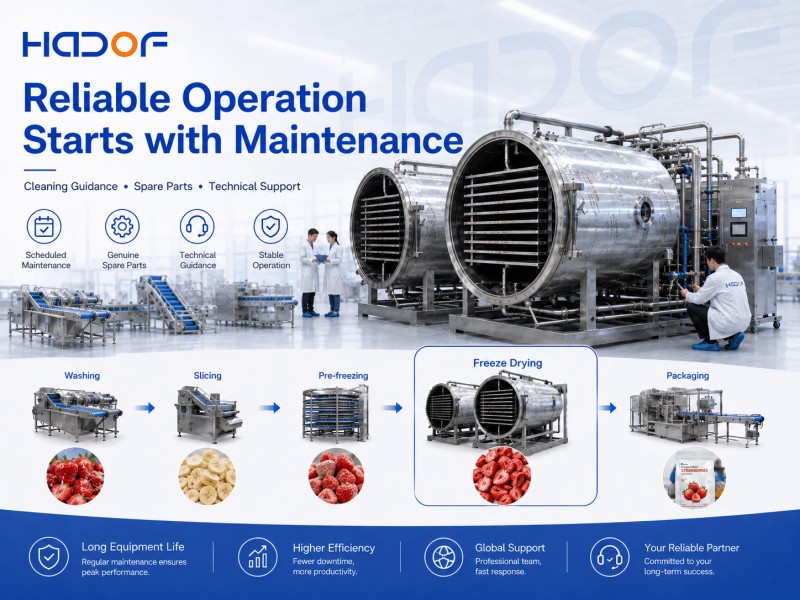
maintenance of an industrial freeze drying equipment
Daily Checks
Start each day with a quick visual inspection. Check the door seal for damage or debris, and make sure it closes cleanly. Look at the trays for bent edges or residue, and confirm that the chamber is clean. Check the control panel for alarms or unusual readings, and confirm that the vacuum and temperature readings are within the expected range before loading product. A five-minute check at the start of the shift prevents many avoidable problems.
Weekly Checks
Once a week, inspect the vacuum pump oil level and condition, and top up or change it according to the manufacturer's schedule. Check filters and clean or replace them as needed. Inspect the condenser for ice buildup or debris, and confirm that the drain lines are clear. Check the refrigeration system for unusual noise or frost patterns, and verify that the shelves heat and cool evenly. Record the results so trends are visible over time.
Monthly Checks
Each month, go deeper. Check door seals for compression and wear, and replace them if they no longer seal properly. Inspect sensor calibration and compare readings against a reference instrument. Check electrical connections for tightness and signs of overheating. Clean the condenser and heat exchangers, and confirm that the control system logs are complete. Review the maintenance history to see whether any component is trending toward failure.
Annual Checks
Once a year, plan a more thorough service. This usually includes a full refrigeration inspection, vacuum pump overhaul or replacement of wear parts, and a complete seal and gasket review. Calibrate critical sensors, test safety systems, and review the control software and recipes. An annual service is also a good time to review freeze dryer capacity and loading practice, because an undersized or overloaded industrial freeze dryer will always be harder to maintain.
Spare Parts and Consumables
Keep a small stock of the parts that wear out most often: door seals, vacuum pump oil and filters, sensor probes, and common electrical fuses. The exact list depends on the machine, but the principle is the same — a worn part should be replaced from stock, not ordered after the dryer has already stopped. Review the spare parts list once a year and adjust it based on the maintenance log. For critical components, keep at least one spare on site, because a single failed part can stop the entire line.
Training Operators
Maintenance is not only the technician's job. Operators should know how to recognize unusual noises, alarms, and changes in cycle time, and they should know which checks they are responsible for. A short training session at commissioning and an annual refresher keep the team aligned. Clear instructions beside the machine, in the local language, help new operators follow the correct procedure without relying on memory.
Shutdown and Restart Checks
When the factory stops for a holiday or a long break, the dryer needs a proper shutdown. Clean the chamber and trays, dry the interior, and leave the door slightly open if the manufacturer recommends it. Check that water and air lines are shut off and that the control system is powered down correctly. On restart, inspect seals and filters before the first batch. These simple steps prevent corrosion, contamination, and start-up surprises after a long pause.
Maintenance Records
Records are part of maintenance, not an extra task. A simple log should record the date, the check performed, the readings, and any action taken. Over time, the log shows which parts fail repeatedly and which checks prevent problems. It also supports audits and helps new operators understand the machine. Digital logs are convenient, but a paper checklist is better than no record at all.
Common Mistakes
The first mistake is skipping maintenance when production is busy; that is exactly when a failure hurts most. The second is replacing parts only after they fail, instead of following a preventive schedule. The third is ignoring small leaks or unusual noises, which often signal larger problems. The fourth is not recording maintenance, so the same issue repeats. Finally, overloading the dryer or running recipes beyond its design limits accelerates wear on every component.
Conclusion
A simple maintenance checklist — daily, weekly, monthly, and yearly — keeps a freeze dryer reliable and protects product quality. The goal is not to do more maintenance, but to do the right checks consistently and record the results. HADOF Food Processing Manufacture supports customers with maintenance guidance and spare parts for its production lines and freeze dryers. Tell us your machine model and product, and we will help you build a maintenance plan that fits your factory.