

Improving granule strength is one of the key priorities for producers using a rotary drum granulator, especially in bio fertilizer manufacturing where moisture, organic matter, and microbial additives can weaken particle hardness. Whether you operate a traditional drum granulation system, a rotary drum pelletizer, or a complete bio fertilizer drum production line, optimizing granule strength not only enhances product quality but also reduces dust, improves storage stability, and increases market value. Below are practical strategies widely used in fertilizer plants to upgrade granule durability and crushing resistance.
1. Optimize Raw Material Moisture and Fineness
The moisture level of the feedstock directly affects the strength of the finished granules. Most drum granulators for bio fertilizer operate best at 25–30% moisture. Too much water creates soft, loose pellets; too little reduces binding efficiency.
Additionally, fine powders (especially <0.5 mm) produce denser and more uniform granules. Many factories use pre-crushing or fine milling to ensure consistent particle size before entering the rotary drum.
2. Improve Binder or Additive Selection
Binders play a critical role in enhancing the mechanical strength of granules. Common binders for organic and biofertilizer drum granulation include lignosulfonates, bentonite, molasses, and microbial-friendly adhesives. Choosing the right binder can increase granule hardness by 15–30%.
Producers also often add filler materials, such as zeolite or clay, which increase the internal structure and compressive resistance of the pellet.
3. Adjust Drum Speed, Tilt Angle, and Residence Time
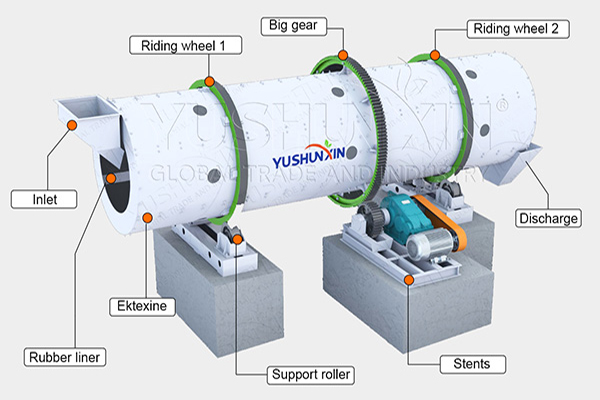
The mechanical parameters of the drum granulation equipment significantly influence granule strength:
- Lower speed improves layering and densification.
- Proper drum inclination ensures sufficient rolling and uniform growth.
- Longer residence time allows granules to compact more effectively.
Many fertilizer plants continuously test these settings until achieving the ideal balance for their material type. Learn more!
4. Enhance Drying and Cooling Efficiency
Even if granules leave the drum with good shape, improper drying can cause cracking or internal voids. A rotary drum dryer should reduce final moisture to 8–12%. After drying, a cooling machine stabilizes granule structure and prevents thermal shock.
Stronger drying–cooling control directly increases crushing strength and reduces fine powder rate.
5. Use Screening and Return Systems to Control Granule Size
Uniform size is essential for strong pellets. Oversized granules often break easily, while undersized ones lack structural integrity. Modern rotary drum granulation lines use high-precision screens and controlled recycle systems to ensure that only properly grown granules continue to later stages.
This closed-loop design produces stronger, more marketable fertilizer pellets.
Whether you manufacture organic, NPK, or biofertilizer products, improving granule strength in a drum system is essential for achieving stable, high-quality pellets. Plants seeking higher efficiency or stronger granules often upgrade to advanced bio fertilizer drum granulators with adjustable internals, steam injection ports, and moisture control technology—helping maximize strength and granulation rate. If you want to know more, welcome to visit: https://www.biofertilizerproduction.com/product/drum-pelletizer-in-biofertilizer-production-project/