

With the increasing focus on sustainable agriculture, converting poultry waste into valuable fertilizer has become a practical solution for many farms. Chicken manure is one of the richest organic materials in nutrients, but it must be properly treated before application. So, how can you produce chicken manure bio organic fertilizer efficiently without compromising quality?
1. What Makes Chicken Manure Special?
Chicken manure contains 1.6–1.8% nitrogen, 1.5% phosphorus, and 0.8% potassium, much higher than cow or pig manure. However, its high moisture and ammonia content make it unsuitable for direct use. Rapid composting is the key to converting it into stable and safe bio organic compost.
2. Factors Affecting Fermentation Speed
To shorten the composting time, several parameters must be controlled precisely:
- Moisture content: Keep it between 55–60% for efficient microbial activity.
- C/N ratio: Adjust with crop residues or sawdust to reach around 25–30:1.
- Temperature: Maintain 55–65°C to ensure pathogen elimination and fast degradation.
- Aeration: Regular turning increases oxygen flow, which accelerates decomposition.
When these factors are optimized, poultry manure composting can be completed in about 7–10 days, compared with 20–30 days for natural piling. Welcome to consult YUSHUNXIN to get your chicken manure composting plan.
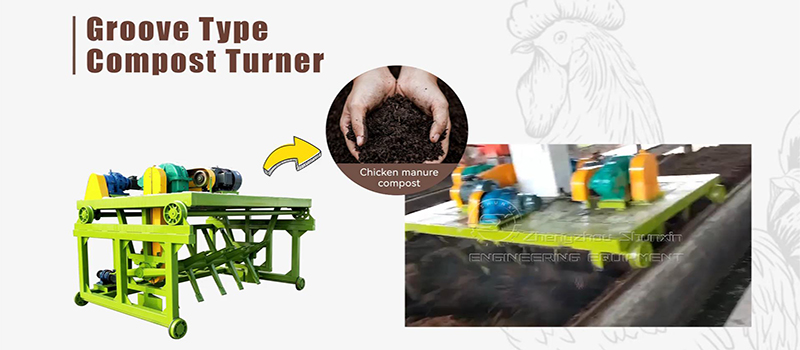
3. Integrating Equipment into the Process
In modern chicken manure organic fertilizer production lines, mechanical assistance plays a key role in improving fermentation speed and uniformity.
Commonly used machines include:
- Compost turner machine – ensures even aeration and heat distribution.
- Fermentation tank system – suitable for confined or odor-controlled composting.
- Crushing and screening unit – refines the compost texture after fermentation.
- Automatic batching and mixing machines – adjust nutrient ratios before granulation or packaging.
By combining these systems, producers can create a continuous process that turns raw poultry waste into high-quality bio fertilizer within two weeks.
4. From Compost to Market-Ready Fertilizer
Once the compost matures, it can be either granulated into pellets or kept as powder form, depending on end-user needs. Adding beneficial microbes during the final mixing step enhances the bioactivity of the product, making it suitable for soil conditioning and crop growth improvement. Learn more!
Conclusion
Efficient chicken dung biofertilizer production is all about balance — the right moisture, temperature, and airflow, combined with reliable composting equipment. With a well-designed process, farms can turn waste into a valuable organic resource while achieving faster turnover and better nutrient recovery. If you need a business plan, welcome to visit: https://www.biofertilizerproduction.com/product/solution-for-using-chicken-poop-as-biofertilizer/