

A bulk blending fertilizer line, sometimes called a BB fertilizer plant or fertilizer mixing system, is mainly used for producing granular compound fertilizers by mixing different nutrient materials. Unlike traditional granulation methods, this process focuses on blending pre-granulated materials in precise proportions. The following explains the common raw materials, working process, and equipment configuration involved in bulk blending fertilizer manufacturing.
Common Raw Materials Used in BB Fertilizer Production
The main feedstocks for a bulk blending fertilizer production line are granular fertilizers with stable chemical properties. Typical materials include:
- Nitrogen sources: urea, ammonium nitrate, or ammonium sulfate.
- Phosphorus sources: MAP (monoammonium phosphate), DAP (diammonium phosphate), or TSP (triple superphosphate).
- Potassium sources: potassium chloride or potassium sulfate.
- Trace elements or additives: zinc sulfate, boron, or magnesium salts, added in small proportions.
To ensure uniform mixing, all raw materials should have similar particle sizes and moisture contents. Materials are usually stored in independent hoppers or silos before batching. Click here to get more!
Main Process Flow of a Bulk Blending Fertilizer Line
The bulk fertilizer blending process consists of several continuous steps designed for accuracy and efficiency:
- Feeding and Batching
Each raw material is loaded into a storage silo. A computerized batching system controls the flow of materials according to the required NPK formula. - Lifting and Conveying
Belt or bucket elevators transport batched materials to the mixing section. This keeps the system compact and reduces manual handling. - Mixing and Blending
The heart of the process is the BB fertilizer mixer, which can be a drum blender or horizontal mixer. During mixing, the granules tumble and roll, ensuring that every component is evenly distributed. - Packaging and Storage
After blending, the product is discharged directly into a packaging machine. Automatic weighing and sealing systems prepare the fertilizer for delivery or bulk storage.
This entire process requires no drying or granulation, which simplifies plant design and reduces maintenance demands.
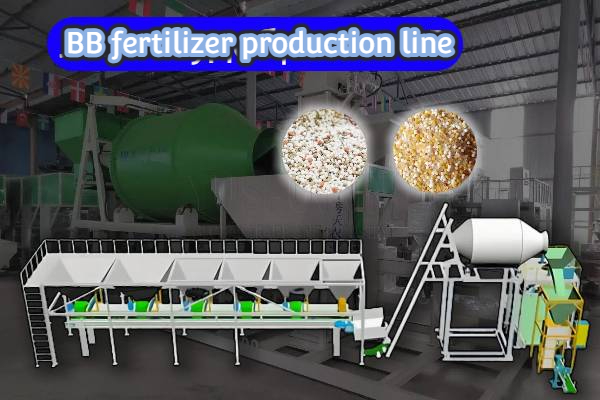
Typical Equipment Configuration
A standard bulk blending fertilizer system may include:
- Storage hoppers and belt feeders
- Automatic batching machine
- Drum or horizontal type BB mixer
- Bucket elevator and belt conveyor
- Automatic bagging scale and sewing machine
- Dust collection unit (optional for cleaner operation)
These machines can be arranged flexibly according to plant size and expected production capacity. Welcome to consult YUSHUNXIN!
Operation Notes and Formula Adjustment
Operators usually prepare several NPK formulas based on soil testing data and crop requirements. Before production, the formula is input into the control system, which adjusts the batching accuracy automatically. Periodic calibration of weighing devices and inspection of the mixing chamber are important for maintaining consistent quality.
Conclusion
A bulk blending fertilizer manufacturing line provides a simple but precise way to produce customized NPK fertilizers using granular raw materials. By focusing on correct batching, uniform mixing, and stable material handling, producers can ensure that each batch meets agricultural nutrient requirements. The process design can be adapted to different plant scales, from small local workshops to large fertilizer distribution centers. For more details on fertilizer blending system setup, visit Yushunxin’s technical page: https://www.fertilizerequipmentprice.com/bulk-blending-fertilizer-line/