

When entrepreneurs explore fertilizer manufacturing opportunities, one of the most frequent concerns centers around fertilizer plant cost. Among all the machines in an NPK fertilizer production line, the compound fertilizer granulator plays a decisive role. Investors often ask: how much should you invest in a granulation machine such as a disc granulator, double roller extrusion granulator, or rotary drum pelletizer? The answer involves not only the machine price but also the raw material flexibility, equipment configuration, and long-term operating cost. A rational investment decision should carefully evaluate both fertilizer production plant cost and the expected output efficiency.
What Raw Materials Can You Use for NPK Compound Fertilizer Granulation?
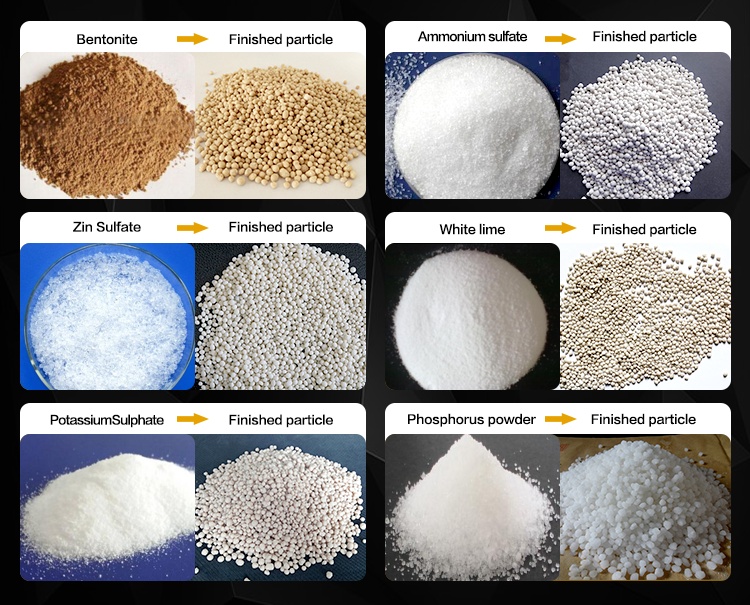
When a company sets up an NPK fertilizer production plant, the selection of raw materials strongly influences the production procedure and the granulator price. A compound fertilizer granulator machine must process diverse powders into uniform granules or pellets, so compatibility with common raw materials is essential.
For nitrogen sources, urea, ammonium sulfate, and ammonium nitrate are frequently used. For phosphorus, raw materials include monoammonium phosphate (MAP), diammonium phosphate (DAP), and superphosphate. For potassium, potassium chloride and potassium sulfate are widely applied. Many investors also consider secondary nutrients or trace elements, such as calcium, magnesium, sulfur, zinc, or boron.
The use of these materials shows that a granulating machine is not limited to one fertilizer recipe. Instead, it supports flexible compound fertilizer manufacturing processes, which directly impacts the overall fertilizer factory cost. A plant that accommodates multiple raw materials ensures broader product ranges and greater competitiveness. Therefore, understanding the raw material spectrum helps investors balance NPK fertilizer plant cost with future revenue potential.
How Does Equipment Configuration Affect Fertilizer Manufacturing Plant Cost?
The fertilizer production line requires more than just a granulator; the cost depends on the whole set of equipment. A well-designed NPK fertilizer granulation line usually includes a crushing machine for raw material size reduction, a batching machine for precise formula mixing, a compound fertilizer granulator for pellet making, and auxiliary machines such as rotary drying and cooling systems, screening machines, and automatic packing machines.
Each machine influences the fertilizer manufacturing plant cost in different ways. The granulator investment may range depending on the type: a disc granulator offers low initial cost but moderate output, a double roller extrusion granulator provides energy-saving dry granulation without drying needs, and a rotary drum granulator handles large-scale continuous production but increases fertilizer factory setup cost.

Investors must also consider the cost of drying and cooling machinery, because moisture content affects fertilizer storage life. Screening machines determine product quality by separating qualified granules from fine powders. Automatic packing equipment reduces labor dependence and improves efficiency. Therefore, the total NPK fertilizer production plant cost results from a combination of machine price, plant scale, and automation level.
How Much Should You Allocate to a Compound Fertilizer Granulator?
The investment decision for a compound fertilizer pelletizer should align with production capacity, raw material features, and market demand. A small-scale plant may allocate a modest budget to a disc granulator, while a medium-scale investor might prefer a double roller extrusion granulator to save on drying cost. Large-scale factories often choose a rotary drum granulation machine because it produces high-volume, round particles with stable quality.
On average, the compound fertilizer plant cost for the granulator section may account for 25–40% of the total fertilizer plant setup cost. Investors who select flexible equipment can later expand production without replacing the entire line. Although the granulator represents a significant expenditure, it determines final granule shape, strength, and market competitiveness. Therefore, expenditure on a reliable granulator should be viewed as a strategic investment rather than a simple purchase.
Conclusion
In summary, the question of “How much should you invest in a compound fertilizer granulator?” requires a comprehensive view of raw materials, machine configuration, and market positioning. The right granulator, combined with essential supporting machines, directly shapes production efficiency and final fertilizer quality. A balanced investment secures long-term cost-effectiveness and minimizes unnecessary upgrades.
For investors seeking professional advice and dependable equipment, cooperation with a specialized manufacturer ensures value. A professional fertilizer equipment manufacturer – Yushunxin – offers customized solutions for NPK fertilizer granulation, compound fertilizer production, and complete fertilizer manufacturing lines with competitive fertilizer plant cost. You can visit: https://www.fertilizerproductequipment.com/npk-fetilizer-plant-cost/