

A salad factory, a fruit processor, or a fresh-cut plant that washes produce continuously usually wants to know how much electricity the wash adds. The fruit and vegetable washing machine for a production line offers air bubble, vortex, and brush roller types, and the energy follows the method and the water. This article explains the energy drivers for a food processing step.
Which Washing Method Uses Less Energy?
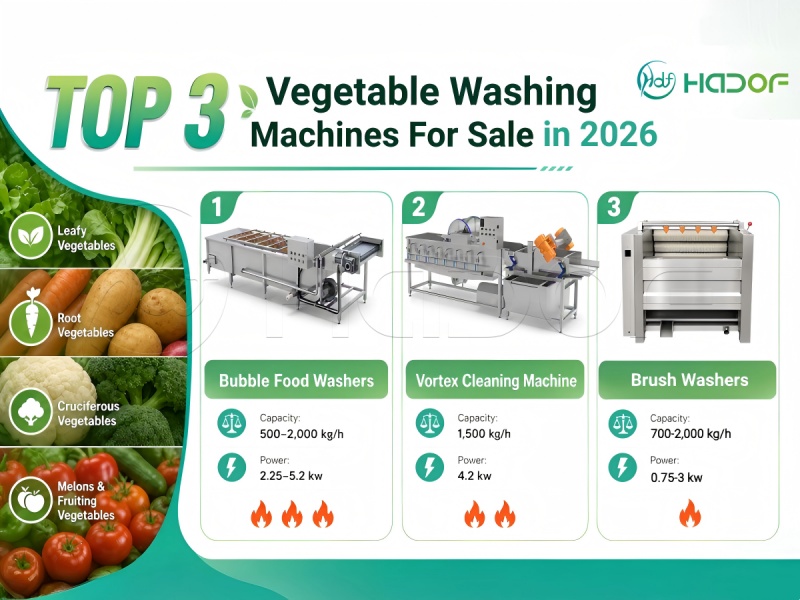
The air bubble washer uses gentle bubbles and water circulation, while the vortex washer uses a rotating flow, and each draws a different load. The air bubble and vortex washing machine with low power keeps the motor small, so the wash stage costs little compared to drying and freezing. A buyer who compares the methods sees the food manufacturing energy clearly.
How Does Water Circulation Lower the Cost?
The circulating water tank reuses the wash water with a periodic replacement, so the pump works less and the plant spends less water and energy. The commercial vegetable washer with water circulation keeps the pressure steady for the bubble or the vortex flow. This control is the food production saving that a once-through rinse misses.
How Does the Washer Connect With a Vortex Line?
A washing machine works best when the washed produce moves directly to draining and drying, because a manual handoff adds labor and moisture. The line connects with a vortex washing machine for an energy line, a drainer, and an air dryer. A smooth connection keeps the food processing system moving.
How Should a Plant Measure the Energy?
A plant measures the washer energy by the motor power, the shift hours, and the kilograms washed, then compares that to the manual washing it replaced. A steady wash also reduces the rework that hand washing causes. This comparison turns the food machinery decision into a clear energy figure.
How Should a Buyer Verify the Washer?
Vegetable washing rewards a trial with the plant's own produce, because soil and delicacy change the wash and the load. You can review the fruit and vegetable washing machine manufacturer before a purchase, and that review shows the wash method and service. A measured run turns the food machinery decision into a dependable energy plan.
How Does the Brush Washer Compare on Power?
The brush roller washer uses rotating brushes and a water spray, so its motor works harder than a bubble washer but less than a drying stage. A plant that matches the brush pressure to the root keeps the load low while the wash stays clean. This comparison is the food equipment energy detail that a buyer should check. It helps the plant pick the method that fits both the product and the power budget.
Conclusion
A fruit and vegetable washing machine uses most of its energy in the water flow, and a circulating tank plus a low-power wash method keeps the energy per kilogram low. These choices keep the food production line efficient. A stable wash therefore keeps the line light and the product clean. If you have interests, you can learn more about https://www.hadofps.com/news/top-3-vegetable-washing-machines-for-sale-in-2026/