

In bio organic fertilizer manufacturing, raw material selection plays a far more important role than many beginners expect. Different organic wastes not only affect nutrient composition, but also determine processing difficulty, equipment configuration, and final product form. Understanding the common raw materials for bio organic fertilizer production helps producers design a more stable and cost-effective manufacturing process.
Animal Manure: The Backbone of Organic Fertilizer Production
Animal manure remains the most widely used raw material in bio-organic fertilizer manufacturing. Cow dung, chicken manure, pig manure, and sheep manure are all rich in organic matter and basic nutrients such as nitrogen and phosphorus.
However, each manure type behaves differently during processing. For example, chicken manure has higher nitrogen content but also higher moisture and odor potential, requiring efficient composting or dehydration. Cow dung, by contrast, has better fiber structure, making it suitable for aerobic fermentation and granulation. Proper pretreatment—such as crushing, moisture adjustment, and compost turning—is essential before entering an organic fertilizer production line.
Agricultural Residues: Turning Crop Waste into Fertilizer Value
Crop straw, rice husks, corn stalks, and wheat bran are commonly used as auxiliary materials in bio organic fertilizer raw material preparation. These materials improve carbon-to-nitrogen balance and enhance microbial activity during composting.
Because agricultural residues are often bulky and fibrous, crushing equipment is usually required before mixing. Once processed, they significantly improve aeration in compost piles and contribute to stable fermentation. Their value lies not in nutrients alone, but in improving the overall composting efficiency and final fertilizer texture.
Organic Processing Waste: High Nutrient Potential with Proper Handling
Food waste, distillery residue, mushroom substrate residue, and sugar industry byproducts are increasingly used in organic fertilizer raw material processing. These materials often contain readily available organic compounds, making them excellent substrates for microbial fermentation.
The challenge is consistency. Moisture levels and composition can vary greatly, so pre-mixing, solid-liquid separation, or controlled fermentation tanks are often introduced to stabilize the material before large-scale fertilizer production. Click here to get more!
Mineral Additives: Enhancing Fertilizer Functionality
Although bio organic fertilizer focuses on organic matter, mineral materials such as phosphate rock powder, potassium feldspar, bentonite, and humic substances are frequently added. These ingredients improve nutrient balance, granule strength, and soil conditioning performance.
In bio-organic fertilizer manufacturing systems, mineral additives are typically blended after composting and before granulation to ensure uniform distribution.
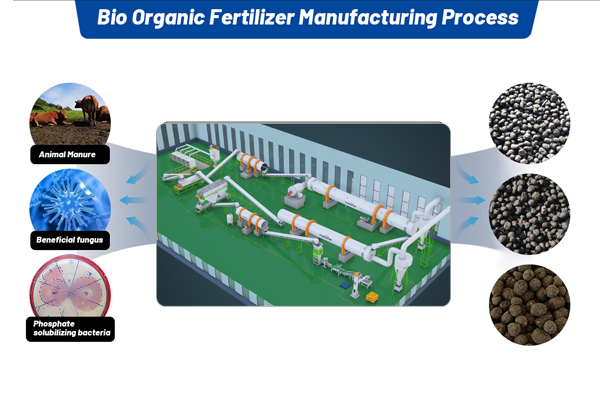
Processing Matters More Than Raw Material Variety
Many producers focus on sourcing diverse raw materials, but processing capability is what unlocks their true value. Crushing, compost turning, fermentation, screening, and granulation all influence whether raw materials become a market-ready fertilizer product.
This is why experienced manufacturers, including companies like YUSHUNXIN, emphasize matching raw material characteristics with suitable bio organic fertilizer production equipment, rather than relying on a single formula.
Final Thoughts
Bio organic fertilizer production is not limited by raw material availability, but by how effectively those materials are processed. By understanding the value and handling requirements of different organic wastes, producers can build a flexible and sustainable fertilizer manufacturing process that adapts to local resources and market demand. If you need a business plan,welcome to visit: https://www.biofertilizerproduction.com/product/bio-organic-fertilizer-production-line/