

In the competitive world of agriculture, reducing the costs of NPK fertilizer manufacturing becomes pivotal for producers aiming for efficiency and sustainability. NPK fertilizers, being a blend of nitrogen (N), phosphorus (P), and potassium (K), require precise production techniques to ensure quality and affordability. The integration of advanced technology in the granulation process can significantly lower npk fertilizer plant setup costs. By utilizing wet and dry granulation methods, manufacturers can optimize their procedures and reduce overall fertilizer factory cost.
What Raw Materials Suit Compound Fertilizer Production?
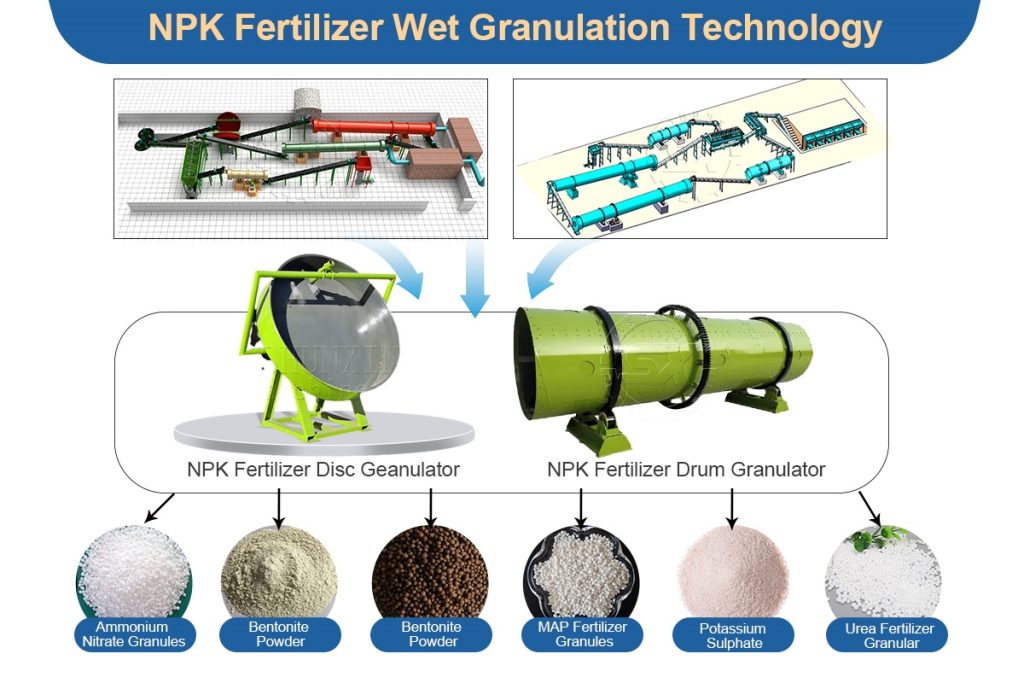
Raw materials play a critical role in the production of compound fertilizers, directly affecting the NPK fertilizer manufacturing plant cost. Typically, producers use urea, ammonium nitrate, ammonium sulfate, monoammonium phosphate, diammonium phosphate, and potassium chloride as core ingredients. Each raw material contributes specific nutrients that enhance the value and efficacy of the final product. Selecting high-quality raw materials ensures better granule formation, minimizing waste and excess costs. The choice of materials, combined with efficient granulation technology, can streamline the production process and reduce npk fertilizer plant costs.
How Do Wet Granulation Methods Benefit NPK Fertilizer Manufacturing?
Wet granulation processes, such as those using a disc granulator or a rotary drum granulator, offer significant advantages in reducing fertilizer manufacturing plant costs. Disc granulators, characterized by their simplicity and versatility, produce uniform granules by agglomerating the moist materials. Rotary drum granulators, on the other hand, use rotating cylinders to facilitate the formation of larger pellets, ideal for bulk production. These methods not only enhance the quality of the granules but also improve production efficiency. The flexibility of wet granulation techniques allows manufacturers to adjust the machinery settings according to the raw material characteristics, thereby optimizing the granule production process and lowering the fertilizer plant cost.
What Role Does Dry Granulation Play in Cost Efficiency?
Dry granulation, primarily using a roller compactor, stands as a cost-effective alternative in NPK fertilizer production. This method involves compacting the raw materials into sheets, which are then broken down into desired granule sizes. The lack of a liquid binder in dry granulation reduces energy consumption and operational costs. Additionally, the simplicity of roller compactors ensures lower maintenance expenses, further decreasing the npk fertilizer plant cost. By adopting dry granulation, producers can achieve significant cost savings while maintaining high product quality and uniformity.
How Can Advanced Machinery Optimize Granule Manufacturing?
Incorporating state-of-the-art machinery into the granule manufacturing process can dramatically lower fertilizer plant setup costs. Modern granulators, pelletizers, and other related equipment enhance precision and efficiency in granulation. These machines offer adjustable parameters that allow manufacturers to fine-tune the granulation process according to specific requirements, ensuring optimal granule size and consistency. By investing in advanced machinery, a fertilizer producer can minimize downtime, reduce waste, and lower overall fertilizer factory cost. A professional fertilizer equipment manufacturer, such as Yushunxin, provides cutting-edge solutions that cater to the unique needs of fertilizer producers, enabling them to achieve cost-effectiveness and high-quality production outcomes.
Conclusion
In conclusion, technology serves as a pivotal element in reducing costs associated with NPK fertilizer manufacturing. By selecting appropriate raw materials and employing advanced wet and dry granulation methods, producers can enhance efficiency and minimize npk fertilizer plant costs. Investing in modern machinery further optimizes the production process, ensuring high-quality granules are produced at a reduced fertilizer manufacturing plant cost. As the industry evolves, adopting these technological advancements becomes crucial for manufacturers aiming to sustain competitiveness and profitability in the global market. You can visit: https://www.fertilizerproductequipment.com/npk-fetilizer-plant-cost/